
Reliability & Safety Awareness
Introduction
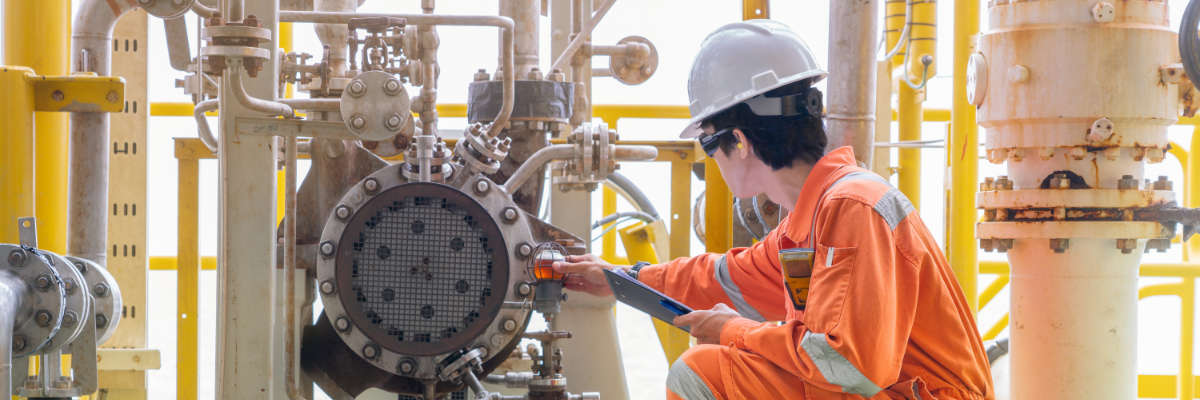
Operators are the eyes and ears in a process plant; their role is to identify unusual behavior of process equipment. Their watchdog responsibilities for equipment and plant surroundings account for 24/7 all year-round surveillance. They are the first responders to abnormal operations, and therefore it makes sense they should know more about the process equipment they are responsible for.
As a minimum, operators should thus have some knowledge of how the equipment functions and what its operating limits are. There is no machine that cannot be wrecked by humans. That said, operational influences that risk equipment failure must be considered and conveyed.
The intent of the course is to give plant operators a basic understanding of some of the common issues they will have to confront when dealing with rotating equipment. The course includes typical checklists describing effective equipment surveillance as assigned to operating personnel at Best-in-Class (BiC) companies.
Course Objectives
Who Will Benefit from the Course

Course Outline
How Operators and Maintenance Technicians affect Reliability and Safety
- Why Best-in-Class (BiC) organisations are now moving to Condition Based Maintenance instead of PM or PdM (Preventive or Predictive Maintenance)
- The role process operators play in Condition-Based Maintenance
We cover construction, "how they work", weakest links and limits of operation for the following common machine types:
- Centrifugal pumps
- Positive displacement pumps
- Electric motors
- Steam turbines
- Gearboxes
- Compressors and auxiliary systems
The following common machine types are covered:
- Centrifugal pumps
- Positive displacement pumps
- Electric motors
- Steam turbines
- Gearboxes
- Compressors and auxiliary systems
Additionally, we cover the "Importance of Lubrication" within them:
- Types of lubrication
- Best-in-Class (BiC) lubricant application methods
All events have causes and for every cause there is an effect. Shutdown and start-up of process equipment are events that should be treated with care and a great thoroughness. It is not the procedure but the individual that makes it happen. The course outlines general and specific guidelines for starting up and shutting down some common process equipment, which several BiC companies have adopted.
Process machinery is the backbone behind process facilities, transporting fluids safely from point A to B to make product. Failures of these machines can be catastrophic with severe consequences. These consequences can range from a near-miss incident, fire, or even to loss of life. Neglecting early signs of insipient equipment failures; audible noise; vibration; hot to touch; unusual smell can lead to catastrophic failure. The course cites a couple of incidents that led to catastrophic failures that could have been prevented.
The course features interactive multiple choice quizzes to verify the student's understanding of the material.
Sign up for the course or request more information now